

The Challenge
Large loads, small margin for error.
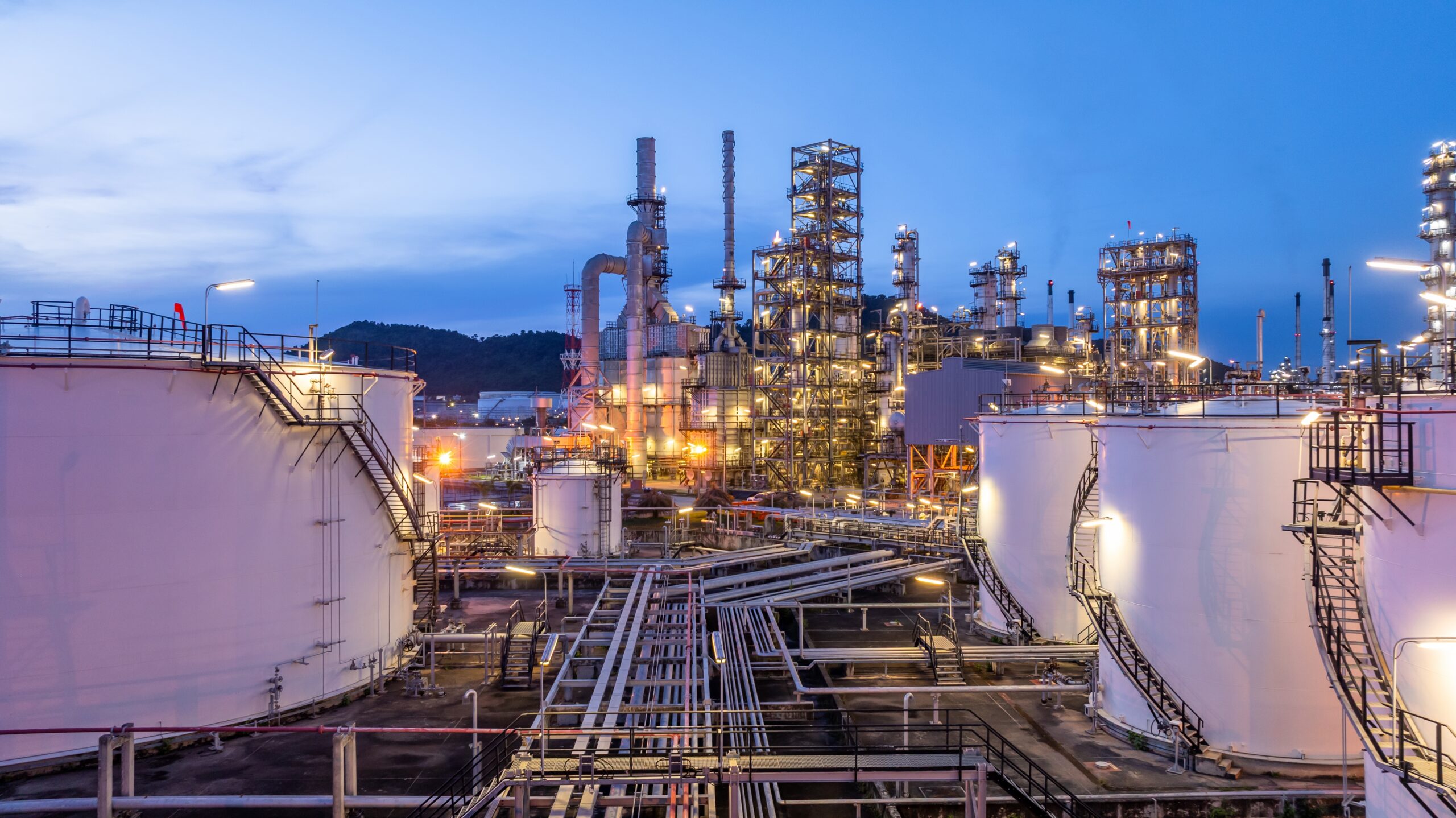
Industrial processes plants for refining, LNG, chemical production, gas processing and fertilizer production have one thing in common: the pace of their investment is outpacing the availability of the grid to support their power demands. Increasing municipal pushback on commercial loads increasing residential rates or reducing reliable power availability,
-
5-7 Years
Utility Power Delivery
Lead times on grid power are stretching due to infrastructure and supply chain delays. Can you afford to wait?
-
2x Increase
LNG Exports
U.S. LNG export capacity is slated to more than double from 15 to 33 Bcf/d, with some of the largest power demands.
Industrial Workflow
Power Consumers in Process Plants
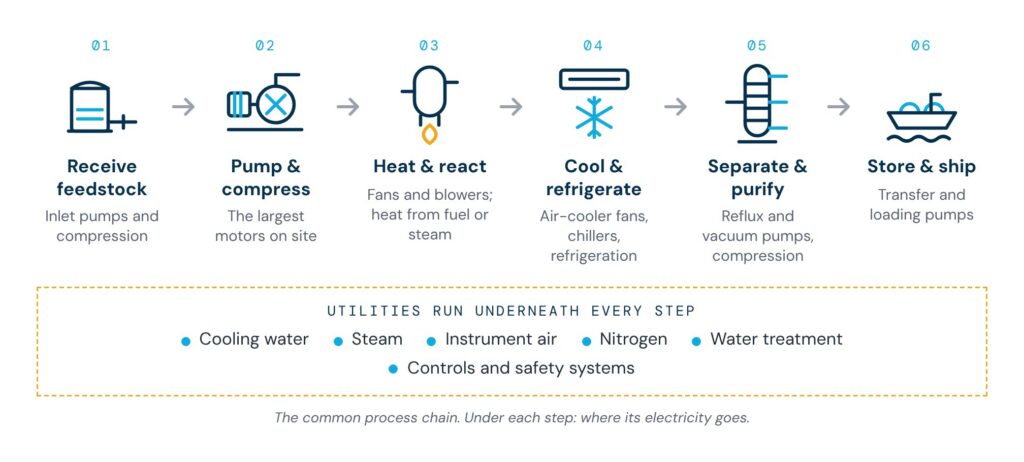
A refinery, an LNG terminal, and an ammonia plant make very different products from the same physical steps. Feedstock is moved, pressurized, heated or reacted, cooled, and separated — continuously, for months or years between planned shutdowns called turnarounds. Electricity does most of the moving and cooling. Fuel and steam do most of the heating.
The Atlas Approach
A faster path to power.
-

1. Scope
Evaluate load requirements, site constraints, timing and long-term power needs.
-

2. Design
Engineer a power solution and operating model around your specific requirements and objectives.
-

3. Contract
Co-develop a PPA / ESA tailored to your financial priorities, building power into your cost of operations.
-

4. Build
Turnkey permitting, construction and start-up getting you to first power in a fraction of the time others can offer.
-

5. Operate
Atlas is your long-term partner, providing clean, reliable power through the life of your assets.
ATLAS SOLUTIONS
Power solutions built to ensure success.
-

Power Design & Engineering
Leverage our power engineering expertise to help you design a custom power solution, including permitting, gas supply and load profiles.
-
Power Plant Operations & Maintenance
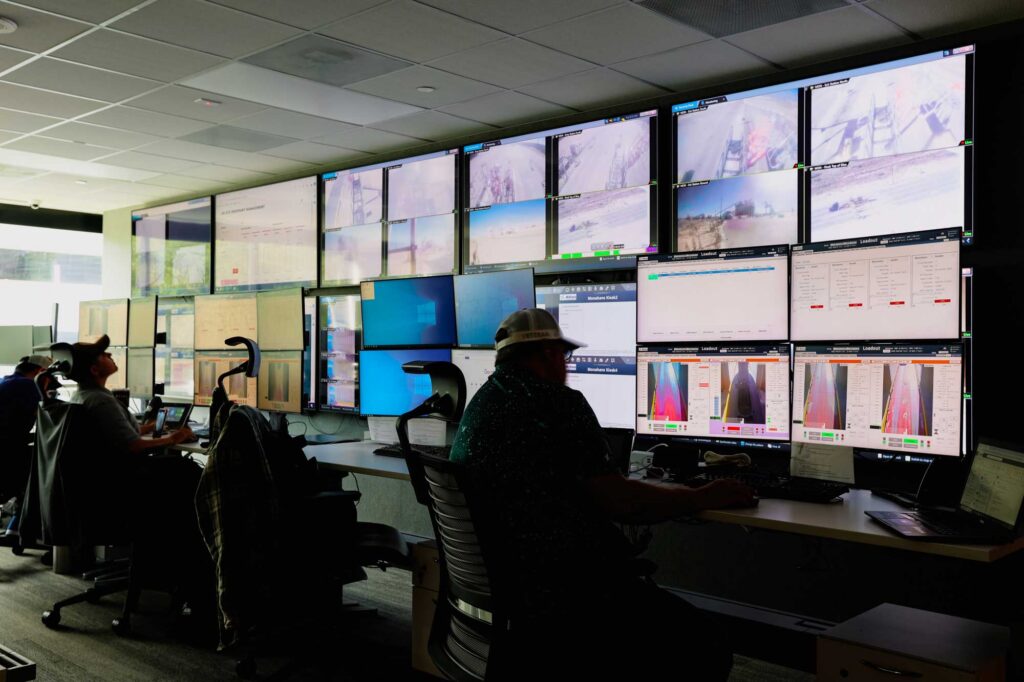
Atlas operates and maintains generating assets for the life of the contract, combining remote, real-time monitoring and onsite, responsive power experts.
-

Permanent, Baseload PrimePower
Scalable generation designed for reliable,
resilient large load power demands. -

Energy Supply Agreements
Access power through a service-based commercial structure rather than owning and operating the generation assets yourself.
Frequently Asked Questions (FAQ's)
Questions about Industrial Process Power?
Can industrial processes be powered off the grid?
Behind the meter power for industrial facilities like LNG, refining, chemical and others is a very viable way to meet the unique power demands of these operations without the risk of waiting on the grid.
Most of a process plant’s electricity becomes motion. Electric motors account for more than 80% of electricity use at a typical refinery or onshore oil and gas facility, according to the industry association IPIECA, with pumps taking the largest share and compressors, fans, and smaller drives most of the rest. The pattern holds broadly across chemicals, gas processing, and industrial gases. The exceptions are electrochemical plants, where electricity is itself a raw material, and plants that drive their largest compressors with gas or steam turbines instead of motors.
Which applications are the biggest power users in an industrial facility
Pumps, compressors, fans, blowers, refrigeration are among the largest loads of electricity an industrial facility sees.
But while many industries share similar chemical synthesis and combustion fired processes, the same process can create very different electrical loads. An LNG train whose refrigerant compressors run on gas turbines draws only its auxiliaries from the electrical system. Built with electric motors, the same train becomes one of the largest loads on its grid: Freeport LNG’s all-electric trains were planned to add about 656 MW of demand on the Texas Gulf Coast, plus 146 MW for gas pretreatment. Drive selection, more than plant size, decides how much electricity a plant needs.
How is a power interruption in an industrial plant different than a typical utility power outage?
Utility reliability is counted in customer outage minutes. A process plant experiences it as trips. A voltage sag lasting a fraction of a second, too brief to register as an outage, can drop variable-frequency drives, motor contactors, and compressor controls — and a plant-wide trip can mean depressurizing, flaring, off-spec product, and a restart measured in days.
Latest Power News
Distributed Power
How Behind-the-Meter Power May Ease the Grid Crisis
With grid delays stretching up to 10 years, large scale data centers and advanced manufacturing facilities are looking for power closer to home.
-
Distributed Power
What is an Energy Supply Agreement (ESA)?


Your project has a deadline. Don't let power risk it.
Let’s talk about your project and develop a plan for reliable, clean power on your terms.